
Best Extension Boxes & Surge Protectors for Homes: What to Buy and What to Avoid in 2026 Leave a comment
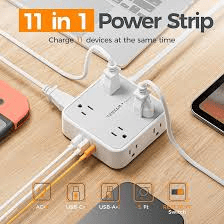
Modern homes have more electronic devices than ever. From televisions and laptops to refrigerators, routers, gaming consoles, phones and rechargeable appliances, a single wall socket often isn’t enough.
That is where extension boxes, power strips and surge protectors become useful.
However, not every extension box offers surge protection, and a cheap or poorly manufactured unit can actually create a fire or electric-shock hazard. UL Solutions explains that a basic power strip primarily provides additional outlets, while a true surge protector contains components designed to limit voltage surges reaching connected electronics.
For homes in Nigeria, where voltage fluctuations and power interruptions can be a concern, choosing the right product is particularly important.
Extension Box vs. Power Strip vs. Surge Protector
These terms are often used interchangeably, but they aren’t exactly the same.
Extension Box
An extension box allows several appliances to share power from one wall outlet. It may have multiple sockets, a switch and sometimes USB charging ports.
Important: Having multiple sockets doesn’t automatically mean the device protects against power surges.
Power Strip
A power strip is essentially a convenient way to add several outlets to one electrical point.
It may include:
- Multiple AC sockets
- Individual switches
- Master power switch
- USB charging ports
- Circuit-breaker or overload protection
But a power strip isn’t necessarily a surge protector.
Surge Protector
A surge protector is designed to help protect connected electronics from sudden increases in voltage.
This makes it particularly useful for sensitive equipment such as:
- TVs
- Computers
- Monitors
- Gaming consoles
- Routers
- Audio equipment
- Chargers
What Makes a Good Extension Box?
Before buying an extension box for your home, consider these features.
1. Adequate Current and Power Rating
Check the maximum current and power rating.
A product designed for light electronics shouldn’t be used to power several high-wattage appliances simultaneously.
UL recommends checking the electrical rating and ensuring the total load connected to the strip doesn’t exceed what the product is designed to handle.
2. Quality Cable
The cable is one of the most important parts of an extension box.
Look for a reasonably thick, durable cable with good strain relief around the plug and extension-box housing.
Poor-quality cords can overheat when overloaded.
The U.S. Consumer Product Safety Commission warns that inadequate wire size, poor strain relief, improper polarity and other construction problems can create electrical shock and fire risks.
3. Overload Protection
A good extension box should have protection against excessive electrical load.
This is particularly useful when several devices are connected simultaneously.
The U.S. Fire Administration recommends using power strips with internal overload protection and replacing worn or damaged extension cords.
What Should You Look for in a Surge Protector?
If you’re buying a surge protector rather than a basic extension box, pay attention to the following.
1. Joule Rating
The joule rating indicates how much surge energy the protector is designed to absorb.
Generally, a higher joule rating is preferable for valuable electronics, although joules aren’t the only factor determining protection quality.
For example, current 2026 surge-protector roundups include models ranging from roughly 800 joules to more than 4,000 joules, depending on the intended application.
For a home office or entertainment setup, I’d generally favor a reputable protector with a reasonably high joule rating rather than choosing solely on the number of outlets.
2. Protection Indicator
Some surge protectors include an LED that indicates whether surge protection is still functioning.
This is a useful feature because surge-protection components can eventually become depleted.
If the protection indicator shows that protection has failed, the unit should be replaced.
3. Safety Certification
Don’t buy an extension box simply because it has an attractive design or a very low price.
Look for legitimate safety certification appropriate to your market.
For products sold in markets using UL/ETL standards, UL Solutions recommends looking for appropriate certification and checking the electrical rating.
The CPSC also warns consumers about counterfeit certification markings on electrical products.
Best Types of Extension Boxes for Different Rooms
Best for the Living Room
A 6–8 outlet surge protector is usually a practical choice for a typical entertainment setup.
It can accommodate:
- Television
- Decoder/streaming box
- Soundbar
- Game console
- Wi-Fi router
- TV accessories
- Phone chargers
Look for widely spaced sockets so bulky adapters don’t block neighboring outlets.
Best for a Home Office
For a workstation, consider an 8–12 outlet surge protector.
You may need connections for:
- Laptop charger
- Desktop computer
- Monitor
- Printer
- Router
- Speakers
- Phone charger
- Desk lamp
USB-A and USB-C ports can also be useful for charging smaller devices.
Recent 2026 testing roundups highlight models with multiple AC outlets, USB ports, higher joule ratings and convenient outlet spacing as strong options for desks and entertainment systems.
Best for the Bedroom
A compact extension box with 4–6 outlets is often enough.
It can power:
- Bedside lamp
- Phone charger
- Laptop charger
- Fan
- Smart speaker
- Other small electronics
A flat wall plug can be especially useful when the socket is behind furniture.
Best for a Home Entertainment Centre
If you have expensive entertainment equipment, consider a dedicated surge protector rather than a basic extension box.
A good setup could include:
TV + decoder + soundbar + console + streaming device + router
A surge protector with adequate capacity and well-spaced outlets can keep the installation neat while providing additional protection.
Some Popular Surge Protector Options
If you’re shopping internationally, several brands and product lines are worth researching.
Anker
Anker’s power strips are popular for home offices and charging setups. Current 2026 testing from Tom’s Guide lists the Anker 351 Power Strip among its top surge-protector choices, with 12 outlets, USB ports and a 2,100-joule rating.
Belkin
Belkin offers a range of surge protectors for home offices and entertainment equipment. Some current models offer high joule ratings and multiple outlets.
APC
APC is well known for power protection equipment and offers surge-protection products alongside its UPS systems.
Tripp Lite
Tripp Lite offers power strips and surge-protection equipment designed for home-office, computer and professional applications.
Important: Availability, plug types, voltage ratings and certifications vary by country. Always make sure the exact model is compatible with your home’s electrical system before purchasing.
Extension Boxes You Should Avoid
Not every cheap extension box is a bargain.
Be cautious when you see products with:
- Extremely thin cables
- Loose sockets
- No manufacturer information
- No electrical rating
- Fake-looking certification logos
- Burning or plastic smells
- Poor-quality switches
- Exposed wiring
- Excessively cheap pricing
- Unusually high power claims without credible specifications
The CPSC has previously warned that defective extension cords, power strips and surge protectors can cause fires, shocks and electrocution.
Never Overload Your Extension Box
One of the biggest mistakes people make is assuming that because an extension box has six or eight sockets, they can safely use all of them simultaneously.
Number of sockets ≠ amount of power available.
For example, connecting a television, laptop and phone charger is very different from connecting multiple high-power appliances.
Avoid using a small extension box to power several high-wattage appliances at once.
The CPSC specifically advises consumers not to overload cords or power strips.
Don’t Daisy-Chain Extension Boxes
Avoid doing this:
Wall socket → Extension box → Extension box → Extension box
Connecting multiple extension boxes together can increase the risk of overload and overheating.
Instead, use one appropriately rated extension box or have additional electrical outlets installed by a qualified electrician.
What About Refrigerators, Freezers and Air Conditioners?
This is where you should be particularly careful.
Large appliances can draw significantly more current than ordinary electronics.
Don’t automatically connect:
- Air conditioners
- Electric heaters
- Refrigerators
- Freezers
- Washing machines
- Electric cookers
to an ordinary multi-socket extension box.
The appropriate solution may be a properly rated dedicated outlet or circuit installed by a qualified electrician.
The CPSC advises using heavy-duty cords for high-wattage appliances and emphasizes matching the cord’s rating to the appliance’s electrical requirements.
Surge Protector vs. UPS: Which Should You Buy?
A surge protector and a UPS serve different purposes.
| Feature | Surge Protector | UPS |
|---|---|---|
| Extra outlets | Yes | Usually |
| Surge protection | Yes | Usually |
| Backup power | No | Yes |
| Keeps computer running during outage | No | Yes |
| Battery | No | Yes |
| Best for | Electronics protection | Computers/network equipment |
If your main concern is protecting a TV, console or home-office equipment from voltage surges, a good surge protector may be sufficient.
If you need your computer or router to remain powered during an outage, consider a UPS.
Best Buying Guide for Nigerian Homes
For Nigerian households, I would prioritize:
For basic home use
4–6 outlet extension box + overload protection
For TV and entertainment equipment
6–8 outlet surge protector + good surge rating
For home office
8–12 outlet surge protector + USB-C/USB charging + protection indicator
For expensive electronics
Higher-quality surge protector from a reputable manufacturer
For computers and networking equipment
UPS + surge protection
Final Verdict
The best extension box isn’t necessarily the one with the most sockets or the cheapest price.
For a safe and useful home setup, look for:
✓ Adequate current/power rating
✓ Quality cable
✓ Overload protection
✓ Good construction
✓ Genuine safety certification
✓ Surge protection when needed
✓ Protection-status indicator
✓ Properly spaced outlets
✓ Suitable plug and voltage rating
Most importantly, don’t overload extension boxes, don’t daisy-chain them, and replace damaged or overheating cords immediately. These simple practices can significantly reduce electrical risks in the home.
A good extension box should make your home more convenient—not become a hidden electrical hazard.
